 Get To Know Us





 972-296-4959
 We Offer Financing



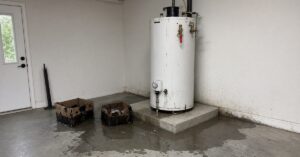
In most Dallas-area homes, the water heater lives in the garage, usually on a raised platform in a corner or tucked into a closet off the garage. It is out of sight and out of mind until the day it fails. When it does, homeowners are often surprised by how much of the house ends up wet.
The garage floor seems like a safe place for a leak. It is concrete, after all. But the water rarely stays there. Here is where it goes, what to do first, and how restoration works when a garage water heater lets go.
How Water Heaters Fail
A standard tank water heater usually lasts eight to twelve years. Minerals from the water settle in the bottom of the tank, and over time the steel corrodes from the inside. Most failures start small, with rust-colored water, popping or rumbling sounds, or a little moisture around the base. Eventually the tank can split open.
When that happens, the tank dumps its 40 or 50 gallons, and then keeps going. As long as the cold water supply stays open, the heater keeps refilling and leaking. A burst that happens while you are at work can release hundreds of gallons before anyone notices.
Why the Water Ends Up Inside the House
Garage slabs are usually poured a step lower than the house slab, which helps. But the water heater platform, the utility closet, and the wall between the garage and the house are all in the path. Water runs along the base of that shared wall, soaks the bottom plate of the framing, and wicks up into drywall on both sides.
On the house side, that wall often backs up to a laundry room, kitchen, bedroom, or hallway. Water moves under baseboards and into carpet pad, laminate, or wood flooring. We regularly see a garage water heater failure wet the flooring in a bedroom or two on the other side of the wall, even when the garage itself looks like it drained fine.
First Steps
- Shut off the cold water supply at the valve on top of the heater. If you can’t reach it safely, close the main shutoff to the house.
- Turn off the energy source. Flip the breaker for electric units. For gas units, turn the gas control to off.
- Check the rooms next to the garage. Pull back carpet at the edges, feel baseboards, and look for dark lines on the bottom of the drywall.
- Move belongings stored on the garage floor, especially cardboard boxes, which soak up water fast.
- Take photos of the heater, the water, and every affected room.
What Restoration Involves
The key to a garage water heater loss is finding how far the water went inside. Our team uses moisture meters and thermal imaging along the shared wall and into the adjacent rooms, then maps every wet area.
Proper water damage restoration usually includes extracting standing water, pulling back or removing wet carpet pad, removing baseboards, and cutting the bottom of wet drywall so the wall cavity can dry. Laminate flooring that took on water often has to be removed, since water gets trapped underneath it. Air movers and dehumidifiers then run until the framing and subfloor read dry.
After drying, the house needs to be put back together. Our complete reconstruction team replaces drywall, baseboards, paint, and flooring, and can match what was there so the repaired rooms blend with the rest of the house.
Insurance Basics
Many homeowners policies cover sudden water damage from a burst water heater. The heater itself is usually not covered, since it failed from age. Coverage can get harder for slow leaks that went on for a long time, so it helps to act quickly and document everything. As an approved vendor for many carriers, we can bill your insurance directly and help keep the process moving.
Heading Off the Next Failure
If your water heater is more than ten years old, it is worth planning a replacement before it fails. Flushing the tank once a year slows down sediment buildup. A drain pan with a line to the outside and a simple leak sensor can give you early warning. Some homeowners add an automatic shutoff valve that closes when the sensor detects water.
Frequently Asked Questions
How do I know my water heater is about to fail?
Watch for rust-colored hot water, rumbling or popping sounds, moisture or rust around the base, and a tank that’s more than ten years old. Any one of those is a reason to have it checked. Replacing a heater on your schedule costs far less than cleaning up after it bursts.
Can I use my garage after a water heater burst?
Usually yes, once standing water is gone and power to the area is safe. The bigger concern is the wall shared with the house, which may need to be opened and dried. Keep stored boxes off the floor until everything is dry.
How long does drying take after a water heater flood?
Most garage water heater losses dry in three to five days. If water got under laminate or into several rooms, it can take a little longer. We confirm dryness with moisture readings before repairs begin, so the problem doesn’t come back after new drywall and paint go up.
Does insurance pay for a new water heater?
Typically not. Most homeowners policies cover the water damage the burst caused, but not the heater itself, since it failed from wear. Some home warranties do cover the unit, so it’s worth checking if you have one.
Call Us Any Time
We respond to water heater failures across the Metroplex, from homes in Dallas to neighborhoods around our home base in Cedar Hill. Call Stanley Restoration at 972-296-4959. A live person answers 24/7 and can get a crew on the way.