 Get To Know Us





 972-296-4959
 We Offer Financing



Homes in the Metroplex are designed to handle 105-degree afternoons, not a week of single digits. That is why a hard freeze here does so much damage. Anyone who lived through the February 2021 winter storm remembers what came after the snow: burst pipes, flooded ceilings, and restoration companies booked for weeks.
Hard freezes don’t happen every winter in DFW, but when they do, the same homes and the same pipes fail in the same ways. Here is what makes North Texas houses vulnerable, what to do before and during a freeze, and what to expect if a pipe does burst.
Why Pipes Freeze Here More Easily
In colder states, plumbing is usually kept inside heated walls and basements, and builders plan for deep freezes. In North Texas, it is common to find water lines running through the attic, in exterior walls with minimal insulation, and in unheated garages. Many homes sit on slabs with lines that come up through exterior walls near the foundation.
The attic lines are the biggest risk. On a summer day, an attic is the hottest place in the house. During a freeze, it can drop close to the outdoor temperature. A water line up there, especially near the eaves or a gable vent, can freeze solid overnight.
What Actually Causes the Burst
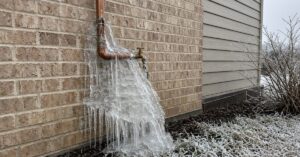
It is not usually the frozen spot that splits. When water freezes, it expands and builds pressure in the section of pipe between the ice and a closed faucet. That pressure has to go somewhere, and the pipe gives at its weakest point.
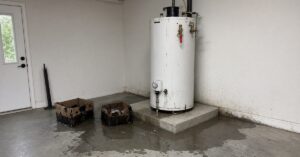
The tricky part is that you often don’t know a pipe has burst until it thaws. While it is frozen, the ice holds the water back. When temperatures rise, the ice melts, and water starts pouring out of the split at full pressure. That is why so many homes flood on the first warm afternoon after a freeze, sometimes while the family is out.
Before and During a Freeze
- Open cabinet doors under sinks on exterior walls so warm air reaches the pipes.
- Let faucets on exterior walls drip. Moving water resists freezing and relieves pressure.
- Disconnect garden hoses and cover outdoor spigots.
- Keep the thermostat steady, even at night.
- If you lose power, open faucets slightly and know where your main shutoff is.
- If a faucet stops flowing, assume a frozen line and keep that faucet open.
If a Pipe Bursts
- Shut off the main water valve immediately. On many DFW homes it sits in a box near the curb or along the front of the foundation.
- Turn off power to any area where water is near outlets or fixtures.
- Open faucets to drain the remaining water from the lines.
- Photograph everything before cleanup starts.
- Call a plumber for the pipe and a restoration company for the water.
What Restoration Looks Like After a Freeze
Freeze-related losses are often bigger than they first look. An attic line that bursts dumps water onto insulation and ceiling drywall, which spreads across several rooms. A line in an exterior wall soaks insulation, drywall, and the bottom plate of the framing, then wicks into flooring.
Professional water damage restoration starts with extraction and a moisture map of every affected room. Wet insulation comes out. Walls may need flood cuts, where the bottom section of drywall is removed so the cavity can dry. Air movers and dehumidifiers run until readings confirm the framing and subfloor are dry.
Once drying is complete, the house has to be put back together. Our complete reconstruction crew handles drywall, insulation, texture, paint, flooring, trim, and cabinets, so you are not hunting for a separate contractor during a week when every contractor in town is busy.
Insurance After a Freeze
Sudden pipe bursts from freezing are commonly covered under homeowners policies, though details vary. Some policies expect reasonable steps to keep the home heated, especially if it was vacant. Document the conditions, save receipts for emergency repairs, and report the claim quickly. We work directly with many major carriers and can help keep the claim moving.
Frequently Asked Questions
How do I know if my pipes are frozen?
The most common sign is a faucet that barely trickles or doesn’t run at all during a hard freeze. You might also see frost on an exposed pipe or notice a toilet that won’t refill. Keep that faucet open, warm the area gently with a space heater or hair dryer, and never use an open flame.
Where is my main water shutoff?
In many DFW homes, the main shutoff is in a box near the street or along the front of the foundation, and some newer homes have one in the garage. Find yours before winter and make sure it turns. A curb key from a hardware store makes the street-side valve much easier to close.
How long does frozen pipe water damage take to fix?
Drying usually takes three to five days. Repairs depend on how much drywall, insulation, and flooring had to come out. After a regional freeze, material and labor shortages can stretch timelines, which is one reason working with a company that handles both drying and reconstruction helps.
Should I turn off my water before a freeze if I’m traveling?
Yes. If you’ll be away during a hard freeze, shutting off the main and opening a few faucets to drain the lines is one of the best ways to protect the house. Leave the heat on as well, since a warm house also protects pipes inside exterior walls.
Ready When the Next Freeze Hits
We respond to frozen pipe emergencies across the region, from older homes in Fort Worth to newer neighborhoods in Keller. Call Stanley Restoration at 972-296-4959, day or night, and a live person will get a team headed your way.